
Understanding the Transition From NFIRS to NERIS
In December 2025, the Bluffton Township Fire District completed its transition from the National Fire Incident Reporting System (NFIRS) to the National Emergency Response Information System (NERIS)—a nationwide modernization of how fire and emergency response data is collected, analyzed, and shared.
What Was NFIRS?
For nearly 50 years, fire departments across the United States used the National Fire Incident Reporting System (NFIRS) to document and report fire and emergency incidents. Established in the 1970s by the U.S. Fire Administration, NFIRS created a standardized national database to help local fire departments, state agencies, and federal partners understand the nature and scope of emergency response activities. It supported research, policy development, national fire prevention strategies, and resource planning.
Why the Change to NERIS?
As firefighting and emergency response have evolved, so too has the need for a data system that reflects today’s all-hazards response environment. The National Emergency Response Information System (NERIS) was developed by the U.S. Fire Administration, in partnership with the Fire Safety Research Institute (FSRI) and the Department of Homeland Security, as a modern, cloud-based platform that replaces NFIRS.
NERIS provides:
- Modern data collection and analytics – enabling near real-time reporting of incidents, trends, and resource use.
- Better interoperability with records management systems, dispatch systems, and other emergency management tools.
- Enhanced reporting flexibility that reflects the full range of fire and emergency services performed by departments today, beyond traditional fire incident categories.
NERIS is designed to support advanced analytics, predictive insights, and more informed decision-making at local, state, and national levels—all while reducing redundant data entry for reporting agencies.
South Carolina’s Transition Schedule
The nationwide transition from NFIRS to NERIS is being implemented in phases. In South Carolina, the State Fire Marshal’s Office coordinated the transition for fire agencies across the state, beginning in mid-2025. Regional trainings and on-boarding support were provided throughout the year to help departments prepare for the new system.
Per the statewide plan, departments were encouraged to complete on-boarding and begin reporting in NERIS ahead of the national deadline to ensure a smooth and seamless switch before calendar year 2026, when NFIRS is fully sunset and decommissioned.
The Bluffton Township Fire District moved to NERIS proactively—before some agencies were required to transition—to allow ample time for training, system testing, and data verification. This early adoption helped ensure continuity in reporting and minimized disruptions as the new system came online.
What the Change Means for Call Tracking
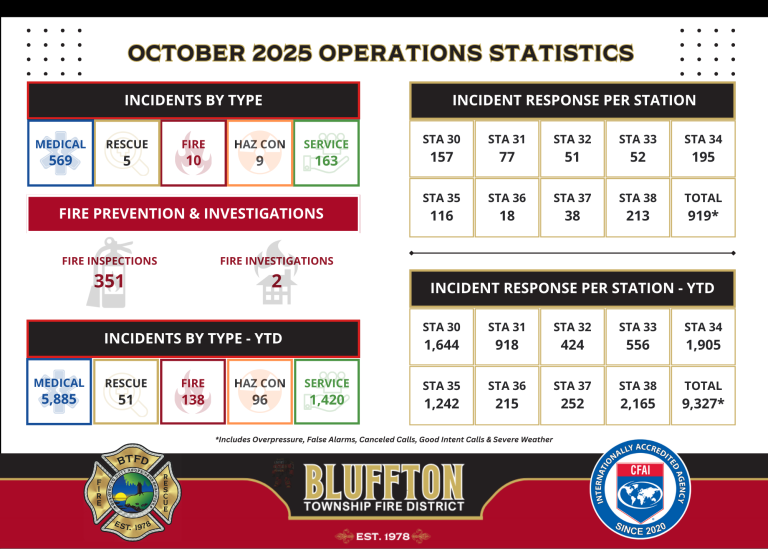
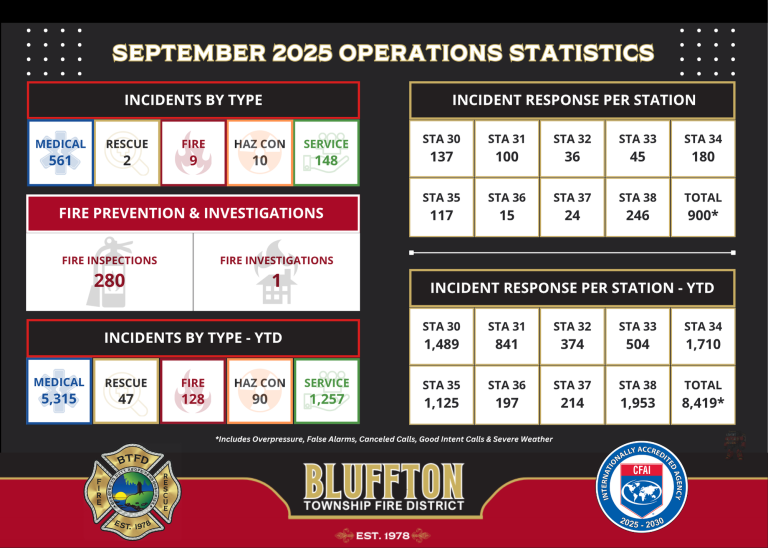
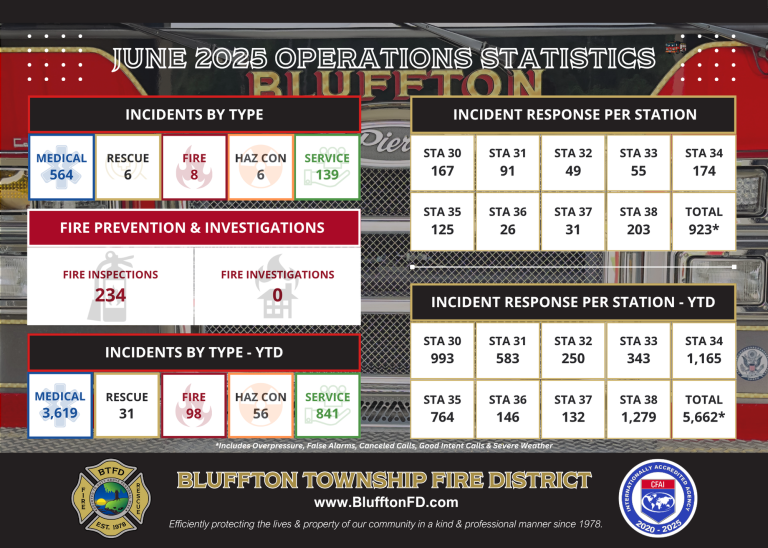
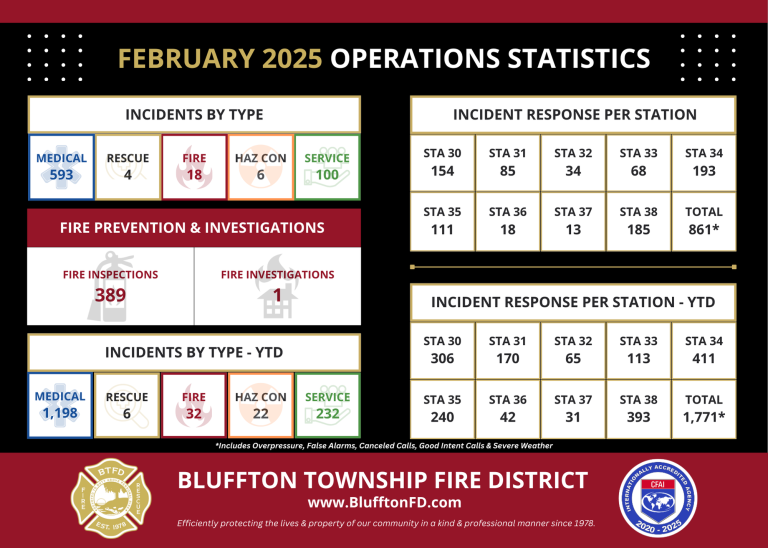
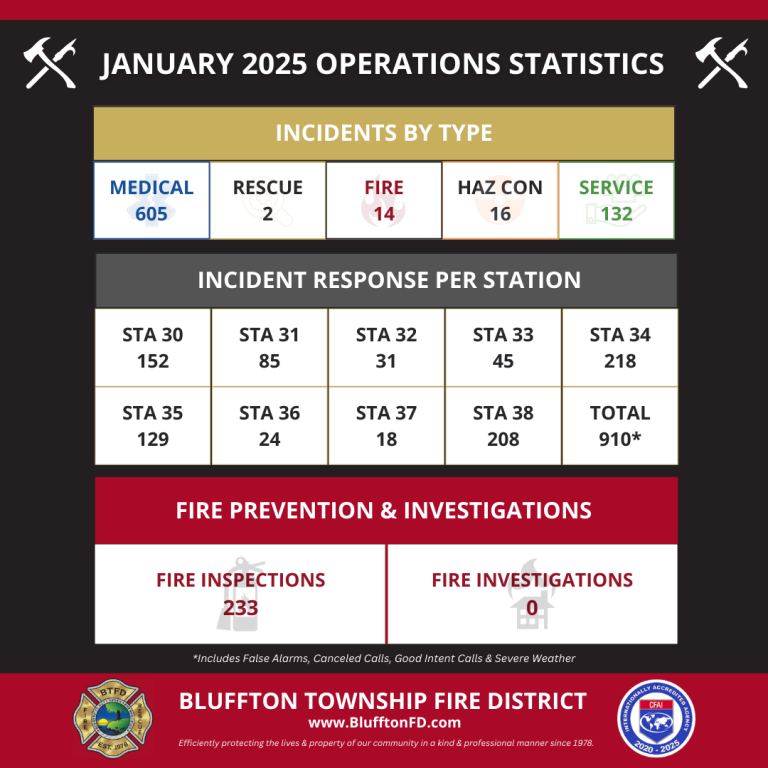
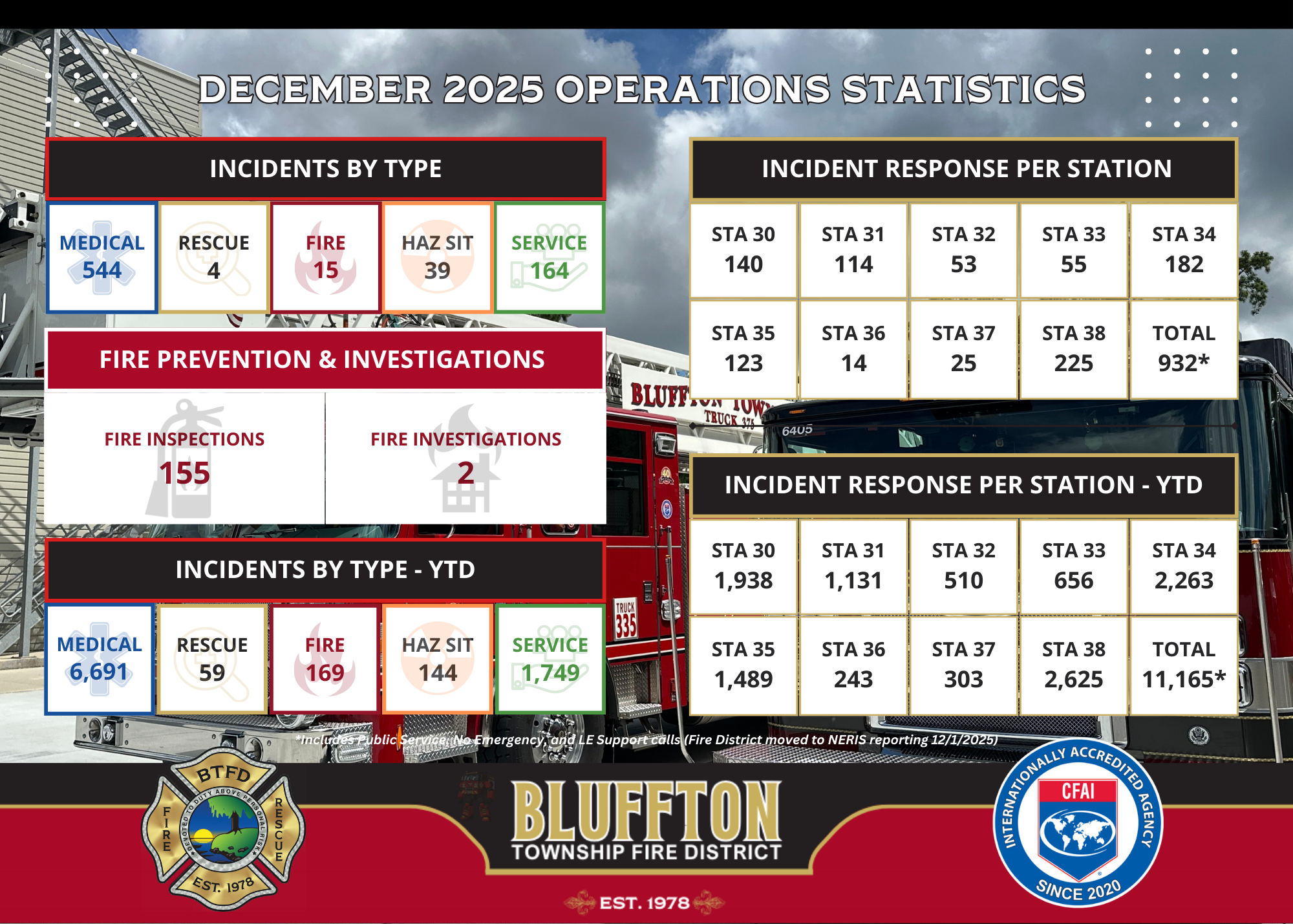
Under NERIS, most incident types the District has historically tracked remain recognizable and consistent. However, the platform’s modern structure enables a more complete and accurate accounting of emergency service and community support activity that previously was not individually tracked in NFIRS.
For example, certain public service responses now fall under categories that better reflect the nature of the service provided (such as citizen assists, non-medical alarms, and disaster or weather-related responses). This improves transparency and gives our community, policymakers, and partner agencies a clearer understanding of how and why our resources are used.
Learn More
Additional information about the NERIS system, including training resources and frequently asked questions, is available on the South Carolina State Fire Marshal’s Office website.