
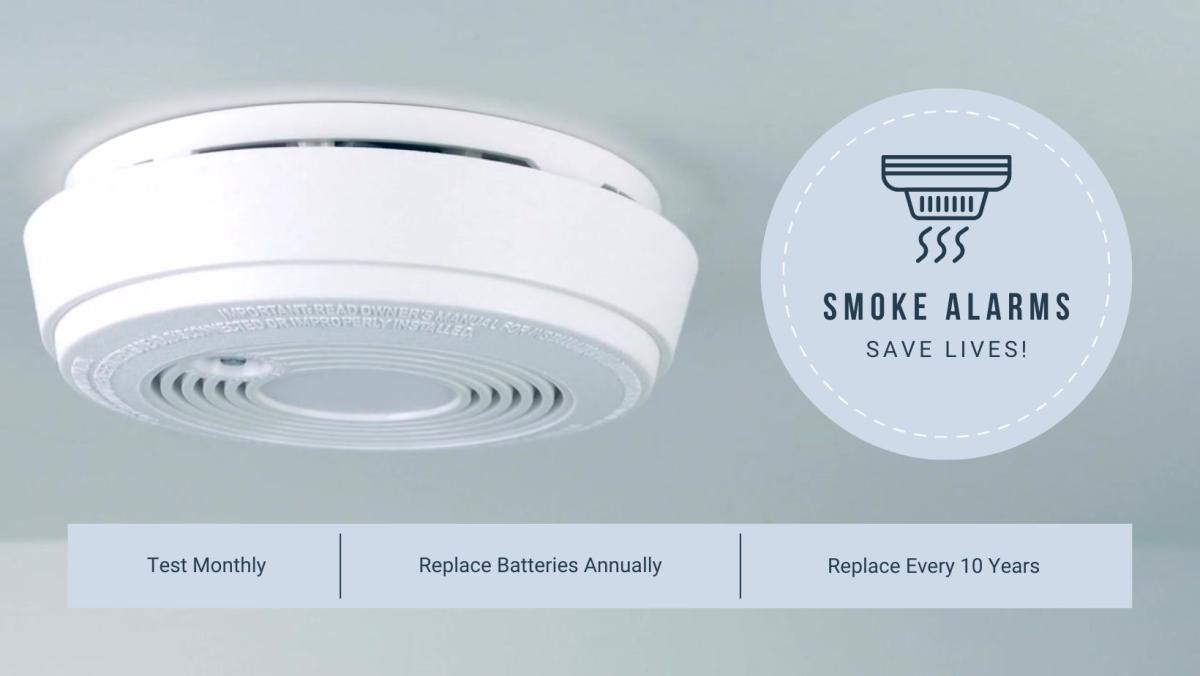
Early Warning Saves Lives
Smoke Alarm Safety & Free Assistance
Smoke alarms detect smoke well before you can, giving you critical time to escape in the event of a fire. For effective protection, smoke alarms should be installed in every bedroom, outside each sleeping area (like hallways), and on every level of your home. However, they should not be installed in kitchens, bathrooms, garages, or workshops where false alarms may occur.
For enhanced safety, consider interconnected combination smoke and carbon monoxide alarms. When one sounds, they all sound—ensuring you’re alerted no matter where the danger originates. These are best installed by a qualified electrician.
Fires in today’s homes spread faster than ever. You may have as little as two minutes (or less) to safely escape after a smoke alarm activates. That’s why early detection and regular maintenance are critical.
Bluffton Township Fire District offers free smoke alarm assistance to residents in our service area. Appointments are available Wednesdays from 8:00 a.m. to 12:00 p.m. and are scheduled on a first-come, first-served basis. After submitting the request form, our Community Risk Reduction team will contact you to schedule your appointment.
Need a Smoke Alarm?
Request a free smoke alarm installation or safety check from our Community Risk Reduction team. Help us keep your home and family protected.
Smoke Alarm Troubleshooting & Maintenance Suggestions
- If your smoke alarm is chirping about every 60 seconds, it’s time to replace the battery. Change the battery immediately to ensure you have proper fire protection.
- If changing the battery doesn’t stop the “chirping,” it’s likely time to replace your smoke alarms. Smoke alarms should be replace every 10 years.
- Never disable an alarm by “borrowing” its battery for another use. An alarm without a battery provides no protection for your family.
- Test your smoke alarms monthly. Typically, this involves depressing the test button on the face of your smoke alarm.
- Change your batteries at least once a year.
- Clean the outside of your smoke alarms using a can of compressed air or a vacuum cleaner with a hose attachment. Never use cleaning products to clean smoke alarms.
- Always follow the manufacturer’s instructions found either in the manual that came with your smoke alarm or on the company’s website.
- Battery-only smoke alarms provide just the minimum level of protection. When possible, use wired, interconnected smoke alarms for maximum protection.
- When installing new smoke alarms, be sure to replace your old units with comparable types. If you have a wired, interconnected smoke alarm replace it with another wired device.
- Always make sure your replacement smoke alarms have been tested by a reputable safety laboratory such as Underwriters Laboratories (UL Listed) or Intertek. You can find the testing laboratory logo either on the smoke alarm or the packaging. Below are examples of their respective logos.
Sample Safety Laboratory Logos

For more information about installing and maintaining smoke alarms visit the National Fire Protection Association website.
Where Should I Install Smoke Alarms?
- In each bedroom
- In the hallway
- Within six feet of each door leading to a bedroom or sleeping area
- On each level of your home
- Installing a smoke alarm in an attic or other unheated spaces where environmental changes could affect the alarm’s operation is NOT recommended.
- Smoke alarms are not recommended for installation in kitchens, bathrooms, garages or workshops where cooking fumes, steam, or vehicle exhaust could cause false alarms.